Showing posts with label differentiation. Show all posts

Sunday, October 4, 2015

Articulating Expectations into a Personalized Learning Environment

I missed my monthly update so I guess I will have to do two in October.  I wanted to talk about some new attributes to my curriculum that have really altered how teachers and students engage in answering the age old question “Where am I?”.  I touched on this idea in July when I discussed "I can" statements.

Once we have the “I can” statements established, they are then used to form a proficiency table.  These table have filled an important void that existed in my previous curriculum.  We have always offered pre and post assessments to teachers.  Ostensibly, the resulting data was to assist teachers in differentiating the curriculum.  However, it quickly became apparent that most teachers did not have a clear view of how to make that happen.  The proficiency tables are a way to fill in that blank.      
Shown below is an example for grade 3 :

LEVEL
DESCRIPTION BASED ON
PRE-ASSESSMENT RESULTS
UNIT SPECIFIC
STUDENT EXPECTATIONS
SUGGESTED
CURRICULAR PATH
4
Pre-assessment data which indicates students master prior knowledge/processes and current content/process (via performance) are level 4.
I can:

  • Use scientific evidence to explain how a design solution reduces the impact of weight from a weather-related hazard such as a blizzard
  • Design and build a structure to withstand the impacts (weight and wind of a hurricane and/or a blizzard.
Students at this level build  their own structure from scratch to withstand an additional weather-related hazard such as wind from a hurricane and/or blizzard.  They are given the parts to build the structure and may also bring parts from home to build the structure within the construction parameters. 
3
Pre-assessment data which indicates students master prior knowledge/processes and on grade level content are level 3.
I can:

  • Explain and interpret data presented in a table, graph, or chart
  • Compare weather v. climate
  • Predict weather based on information presented in a graph, table, or chart
  • Evaluate information from print and nonprint resources
  • Describe and explain how climates vary in different regions of the world
  • Use patterns of change in climate to predict typical weather conditions in different regions
Students at this level should be given more time to conduct the investigations.   The teacher should spend less time modeling the investigation.  Students can also be given more time to design, build, and refine their structural designs.  
2
Pre-assessment data which indicates students have mastered the prior content but does not demonstrate understanding of on grade level content and processes are a level 2
I can:
  • Use print and nonprint resources
  • Use data presented in a graph, table, or chart
  • Identify and describe types of weather
  • Identify and describe impacts from weather-related hazards
  • Describe ways weather affects our everyday lives
  • Work with other students to conduct an investigation
Students are ready for grade level appropriate content and processes with modifications as needed.
1
Pre-assessment data which indicates students who do not understand the prior content are a level 1.
I can:
  • Not identify types of weather
  • Not understand how weather changes from season to season
  • Not identify weather-related hazards
  • Not identify impacts from weather-related hazards
  • Not understand data presented in graphs, tables, or charts
Students at this level should be given the opportunity to access digital data from the weather unit from kindergarten to build background knowledge about weather, climate, and visual data representations.

As you move from bottom to top, students expertise increases.  Ultimately, students should be ready for level 4 by the end of the unit (transferring learning to a new solving a new problem).  This idea is very new to me and to my teachers. It will take a lot of refinement over the next several years to get this process "perfected".

Here is the new problem that has developed.  While we are finally able to determine student levels of mastery after pre-assessment, the problem is "then what".  

To be specific,  imagine a classroom where you have students spread across all four proficiency levels.  Three students do not have the prior knowledge necessary to engage with the grade level content (Level 1).  There is one student who spent a summer at meteorology camp and is past level four.  Fifteen students are ready for the curriculum as is (level 2) and the remaining nine pretty much know the content (level 3) and just need time to work on their prediction skills.  That's a class of 29 if you are keeping count.  What do multiple needs groups look like in science?  It is very different than reading where we litterally have moving parts.  If we are working towards a personalized learning environment for students, we need to develop strategies for teachers to manage it.  Anyone have ideas or good references for what this might look like in the elementary classroom?

As always,  keep the comments and questions coming.  We are in this together.
  

Saturday, March 8, 2014

But What Does "All" Mean

I tend to approach curriculum writing like any project by laying out the constraints.  As I started pondering all the constraints before me,  I have to admit I was more than a little overwhelmed (See below).  When we use the word differentiation in education, it typically means ability considerations.  How do you meet the needs of a student with the dyslexia at the same time meeting the needs of a student capable of reading four grade levels above the norm in the same classroom?  That is a very real dilemma for most elementary classroom teachers. And before you say it, there is no such thing as homogeneous grouping.  The closest we get to homogeneous grouping is by age.  Other than that, every child is different-period.


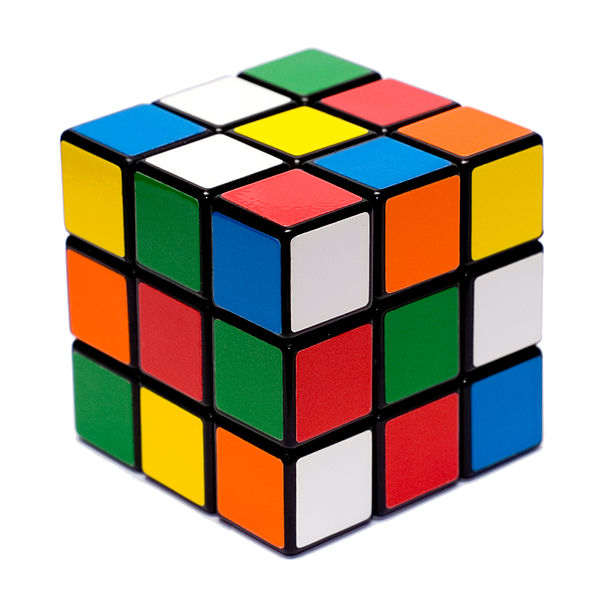
Another view of differentiation stipulates looking how students learn.  This leads a discussion of learning styles.  So lets consider just these two examples.  Think of it like a grid (below).  When I plan a lesson, I would need to consider how to meet the needs of a student with dyslexia that learns best by moving.  Now imagine doing that with a class of thirty students.


Now just to make things interesting, lets think about making the curriculum culturally relevant.  That gives us X,Y, and Z coordinates to consider.  How do I meet the needs of a student reading four grade levels above her peers, that learns best visually, and is from a culture outside of the community norm. Start compounding this with thirty students and you get an idea of the task before me and classroom teachers. 

In previous curriculum projects, we spent much time and effort building differentiation suggestions into our curriculum.  However, we do not know if they are effective at meeting students needs or even used by teachers.


Recently, differentiation has been re-branded .  Enter the age of "Universal Design  for Learning".   The premise for this model of curriculum is that rather than waiting until the teacher has to make the differentiation (think of it like bolting on a modification), the curriculum is written in a way that is accessible to ALL students.  I agree with the idea, but have trouble seeing it in the real world.   

Perhaps the best example of this is found in the discussions surrounding personalized learning environments.   As a classroom teacher faced with an ever growing stack of IEPs (Individual Education Plans), I speculated that in the future everyone would have an IEP.  Personalized Learning seems to be moving in that direction...Sort of. 

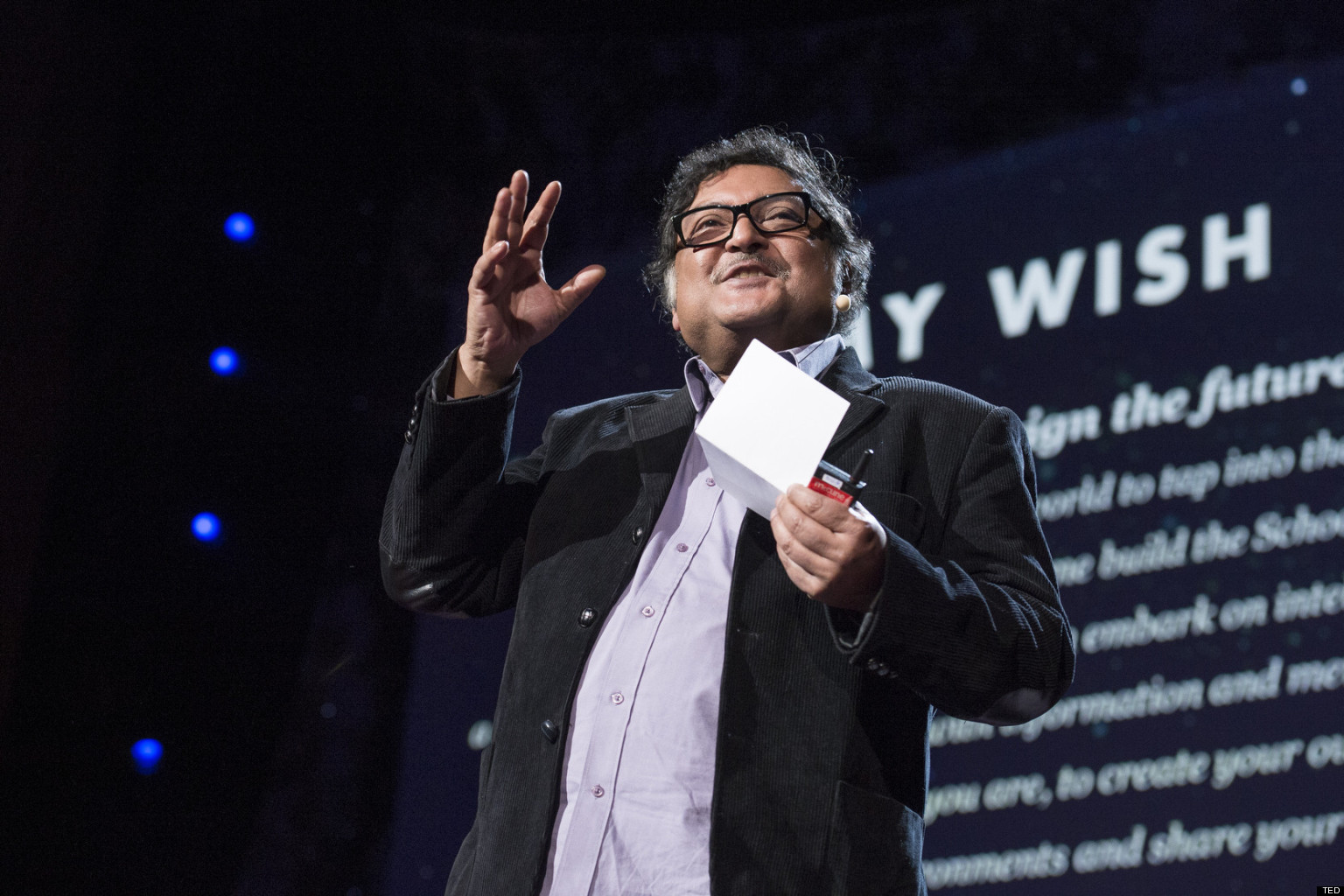
The great difference between an IEP and Personalized Learning is control.  IEPs are developed and moderated by a group of people on behalf of the student.  They take tremendous amounts of time and resources to develop and monitor.  In the end, the student is escorted through their educational experience.  Any difficulties that lie before them are removed.   In many cases, these students then graduate from high school not sure how to learn on their own without that escort.  Personalized learning changes this premise.  One of the goals of personalized learning is to teach the students to think about how they learn and to select the "learning objects" best suited to how them.  This requires access to a computer and an Internet connection.  For glimpse at an extreme example of  this type of classroom I would look the work of Sugata Mitra.  


So the question for today,  how are you meeting the needs of all students?